Milwaukee properties encounter persistent arachnid activity due to localized microclimates near Lake Michigan and the Milwaukee River corridor. Dense vegetation and moisture along neighborhood zones such as Lake Park,…
Milwaukee properties encounter persistent arachnid activity due to localized microclimates near Lake Michigan and the Milwaukee River corridor. Dense vegetation and moisture along neighborhood zones such as Lake Park, Riverwest, and Bay View generate high midge and aquatic fly populations, which serve as the primary food source for orb weavers and common house spiders. Structural architectural styles common to Milwaukee County, including late-nineteenth-century timber-framed duplexes in Brewers Hill and brick foundation masonry in Walker's Point, contain exterior expansion joints and aging mortar tracks that spiders use for harborage and interior transit. Spiders do not consume building materials, but their presence indicates unsealed building envelopes and active underlying insect traffic.
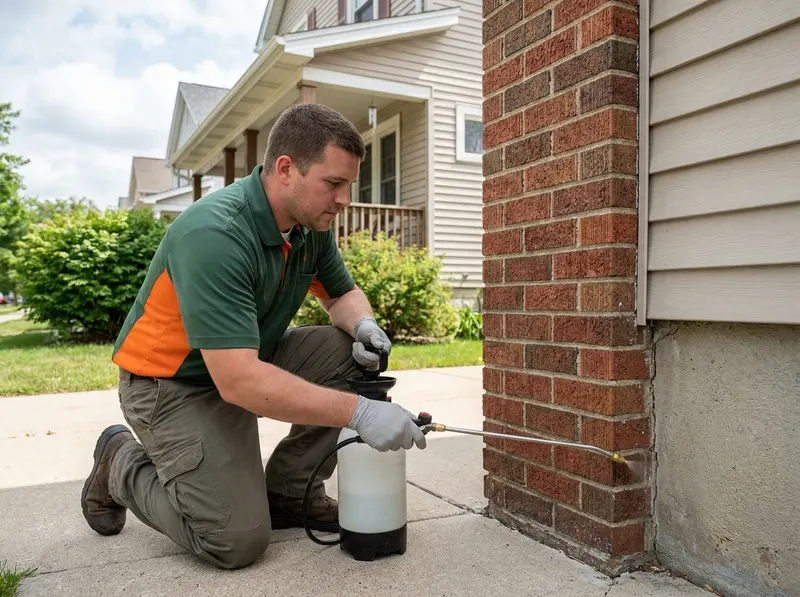
Effective arachnid mitigation requires an exterior-first mechanical and residual strategy rather than broad interior chemical saturation. Liquid pyrethroid microencapsulations applied 3 feet up the exterior foundation and 3 feet out onto soil or hard surfaces create an unbroken residual repellent band. Physical removal using specialized extension poles detaches egg sacs and visible webbing under eaves, window lintels, and soffits, halting the reproduction cycle before juveniles disperse. For properties with unfinished stone basements or historic rubble foundations, frequently found in Washington Heights and Sherman Park, targeted void dusting along sill plates directly neutralizes retreat zones without lingering air-suspension chemicals in primary living areas.
Treatment selection depends on structural materials and property boundaries. Zero-lot-line townhomes and converted warehouse lofts in the Historic Third Ward require precise perimeter spot treatments along masonry facade lines and window tracks, whereas standalone frame bungalows with wrap-around porches require broad-surface eaves clearing and sub-deck residual barriers. Spot-treating single interior rooms provides temporary localized relief, but lasting elimination requires treating the exterior envelope where spiders establish web anchors. Unsealed window screens, worn weatherstripping under garage side doors, and foundational gaps around plumbing conduits must be sealed to prevent autumn movements when outdoor temperatures drop across southeastern Wisconsin.
Every job gets a firm, written price after a free on-site visit.
Tell us about your spider control job in Milwaukee and we'll send a clear, written quote, usually the same day.
 Rasteno Pest Specialists