Pest control service in Milwaukee addresses persistent local vectors like Norway rats in fieldstone basements, carpenter ants nesting in damp exterior framing, and seasonal German cockroach populations. Property owners searching for a dependable pest control service near me receive transparent evaluations focused on physical exterior defense rather than unfocused chemical saturation.

Pest Control Service in Milwaukee is a targeted architectural exclusion and extermination discipline that locates structural breach points, clears insect or rodent vectors, and re-establishes household sanitation across Milwaukee County properties.
Every service reflects the same meticulous attention to detail, whether it's a single job or a larger pest control service project across Milwaukee.
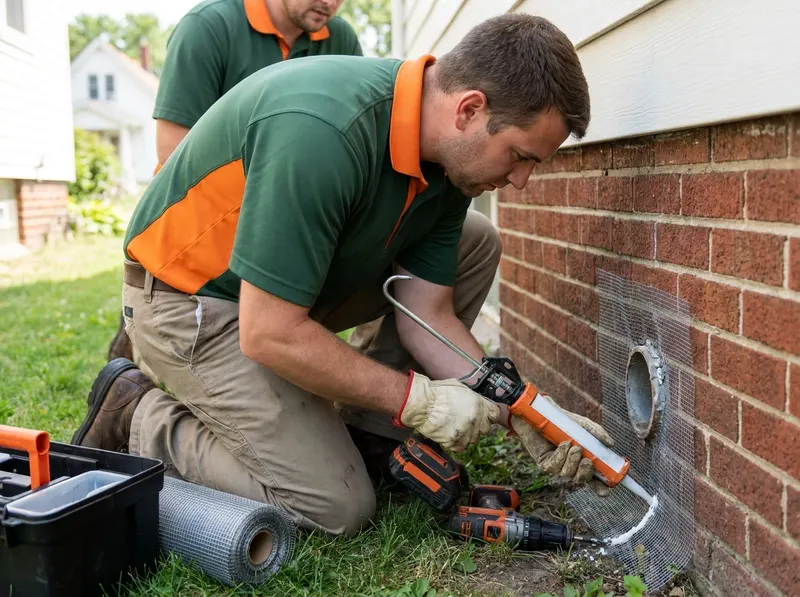
Comprehensive elimination of Norway rats (Rattus norvegicus) and house mice (Mus musculus) through exterior perimeter audits, mechanical line sealing with 1/4-inch 19-gauge galvanized hardware cloth, and interior snap-trap suppression. Specialized containment protocols focus on aging Milwaukee basement foundations, floor drains, and sill plate gaps. Technicians trace rub marks, urine deposits with ultraviolet detection lamps, and droppings to uncover concealed pathways along ceiling joists. Exterior gaps around gas meters, hose bibs, air conditioning refrigeration lines, and deteriorated basement window jambs receive heavy-duty steel mesh barriers backfilled with non-toxic, polyurethane expanding foam. Interior capture relies on calibrated mechanical snap traps situated along structural runway lines to extract existing vectors without introducing rodenticide baits that cause indoor carcasses to spoil behind drywall.
Get a quote →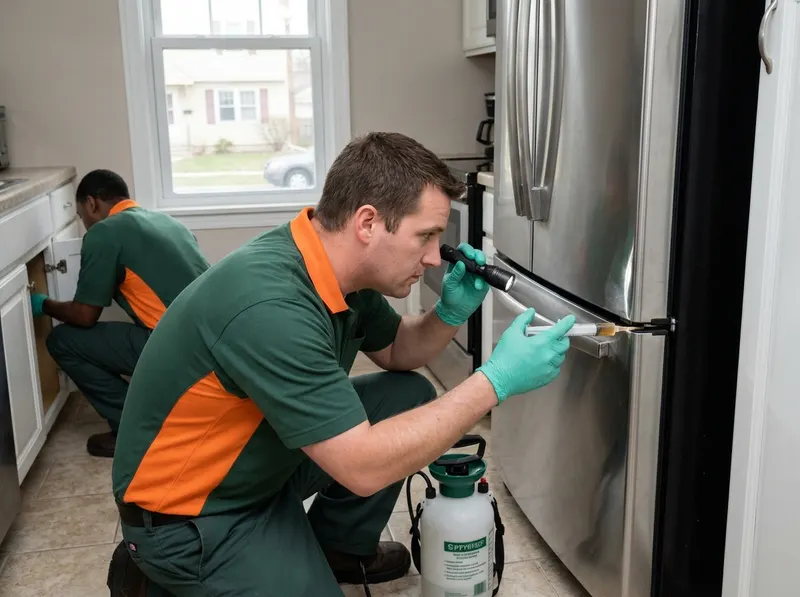
Eradication of German (Blattella germanica), American (Periplaneta americana), and Oriental (Blatta orientalis) roach populations utilizing target-specific bait matrices, microencapsulated non-repellent formulations, and juvenile insect growth regulators (IGRs). Treatments target localized voids beneath food prep cabinetry, utility chases, and high-moisture baseline plumbing runs. Technicians conduct void injections into hollow table legs, kickplates, and the electrical motor housings of refrigeration appliances where warmth accelerates reproductive egg capsule development. Monitoring programs incorporate pheromone sticky interceptor boards positioned behind kitchen ranges and water heaters to gauge nymph emergence rates. Follow-up visits rotate bait active ingredients between abamectin, indoxacarb, and fipronil to prevent behavioral bait aversion and physiological resistance across heavy multi-unit infestations.
Get a quote →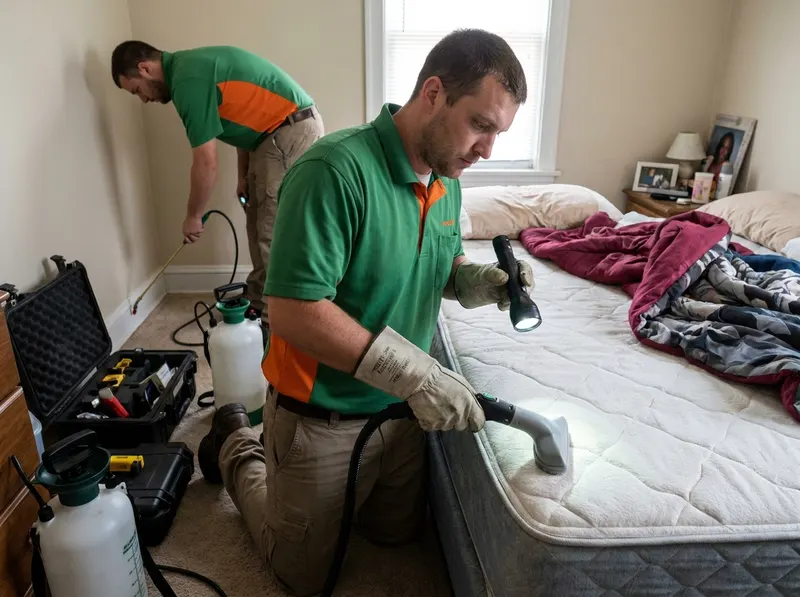
Systematic remediation of Cimex lectularius employing combined structural thermal applications and residual perimeter barrier treatments. Detailed protocols encompass mattress encasements, void injection behind baseboards, and comprehensive crack-and-crevice treatments across sleeping quarters. Mobile heating equipment elevates ambient room temperatures to a sustained lethal range between 120 and 135 degrees Fahrenheit, driving convective heat deep into mattress seams, box springs, headboards, and wall cavities to dehydrate bed bug adults, nymphs, and unhatched eggs in a single deployment. Complementary silica dust formulations applied inside electrical outlet boxes and along perimeter tack strips deliver extended residual protection against reintroduction, ensuring that stray travelers crossing room thresholds encounter lethal desiccant barriers.
Get a quote →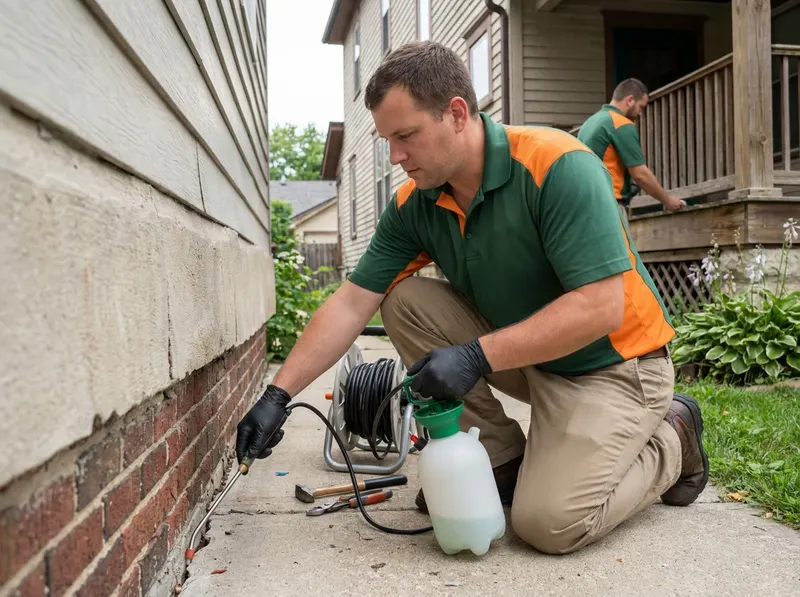
Targeted barrier treatments and sweet-protein carbohydrate baiting systems designed to eliminate both satellite and parent colonies of carpenter ants (Camponotus pennsylvanicus), pavement ants (Tetramorium immigrans), and odorous house ants (Tapinoma sessile) nesting near damp subflooring or window framing. Service protocols establish non-repellent perimeter chemical zones around exterior brick foundations, porch steps, and tree branch contact points to intercept foraging workers. For carpenter ant infestations, acoustic inspection tools locate hollow excavation galleries inside structural framing timbers, allowing targeted micro-void injections of botanical or synthetic active agents directly into parent nesting cavities without demanding invasive wall deconstruction.
Get a quote →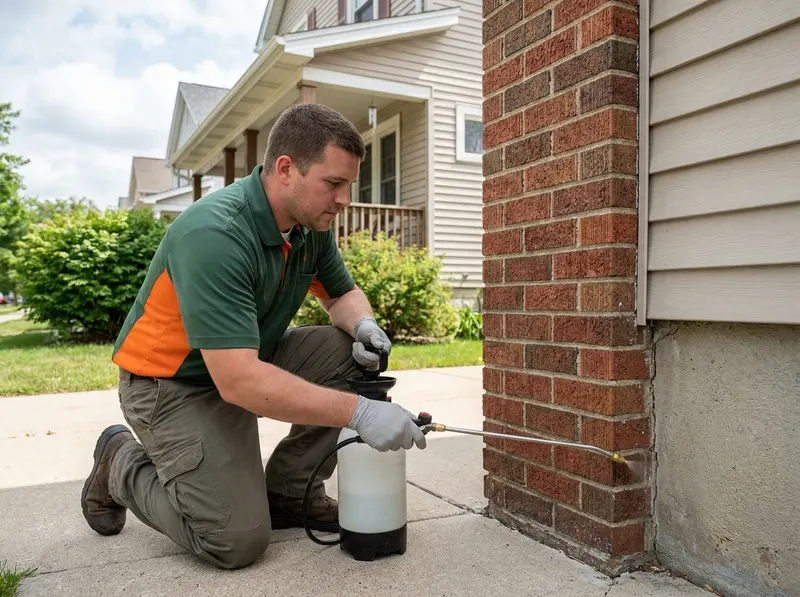
Direct web de-webbing clearance combined with exterior micro-crystallized insecticide barrier bands along foundation soffits, window wells, eaves, and shadowed masonry corners to prevent yellow sac (Cheiracanthium inclusum) and wolf spider (Lycosidae) indoor migrations. Technicians deploy extendable nylon perimeter brushes to clear egg sacs and structural webbing from porch overhangs, gutter lines, outdoor lighting fixtures, and basement egress windows. Micro-crystallized liquid concentrates form microscopic suspended surface crystals that adhere directly to the tarsi of crawling arachnids, preventing seasonal indoor entrance while mechanical door sweeps close threshold gaps at garage and entry points.
Get a quote →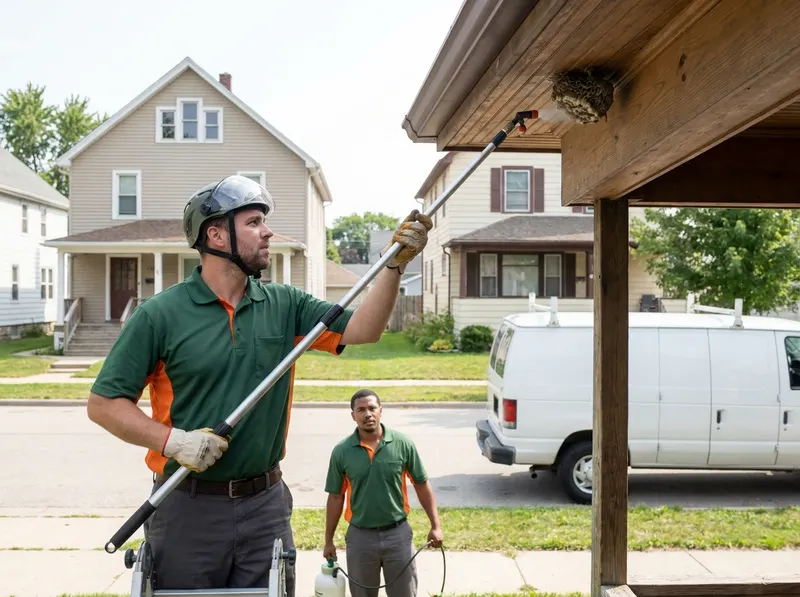
Protective structural removal of paper wasp nests, bald-faced hornet (Dolichovespula maculata) aerial hives, and underground yellowjacket (Vespula) colonies from exterior overhangs, wall voids, and yard perimeters utilizing targeted direct-injection dusting and residual perimeter protection. High-pressure dusting wands deliver pyrethroid formulations directly into void nesting chambers beneath aluminum siding corners or soffit channels, neutralizing defensive foragers and egg-laying queens within minutes. Following complete colony mortality, technicians physically extract paper nests and mud tubes from the structure to eliminate secondary scavenging by carpet beetles, followed by exterior caulking of open architectural voids.
Get a quote →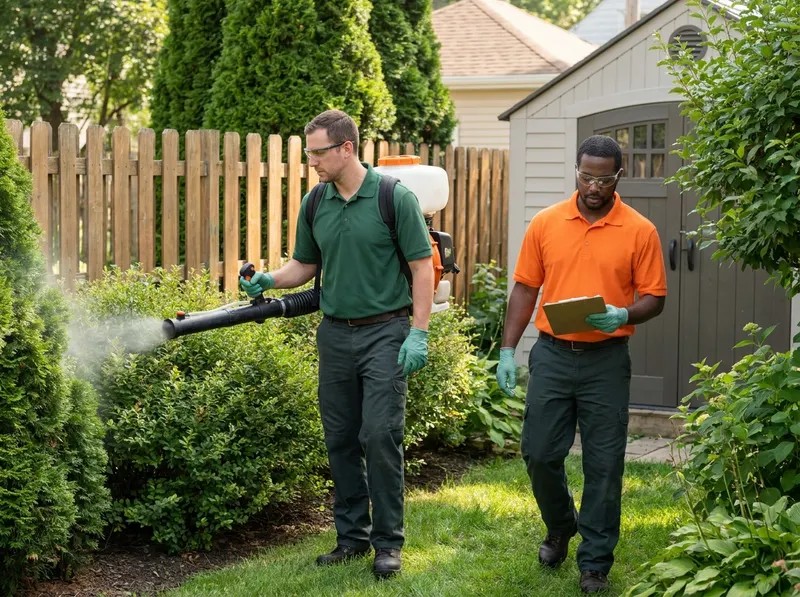
Foliage barrier misting utilizing residual microencapsulated adulticides paired with biological larvicide briquettes in non-draining yard depressions, targeting shaded resting corridors along property lines, ornamental plantings, and perimeter fencing. Backpack mist-blowers deposit ultra-fine droplet applications to the undersides of broadleaf shrubs, dense groundcover, ivy beds, and tree canopies up to a height of 10 feet where adult mosquitoes harbor during daytime heat. Technicians treat non-draining low areas, catch basins, bird baths, and downspout splash blocks with natural Bacillus thuringiensis israelensis (BTI) microbial rings to kill aquatic larvae before they emerge into biting adult populations.
Get a quote →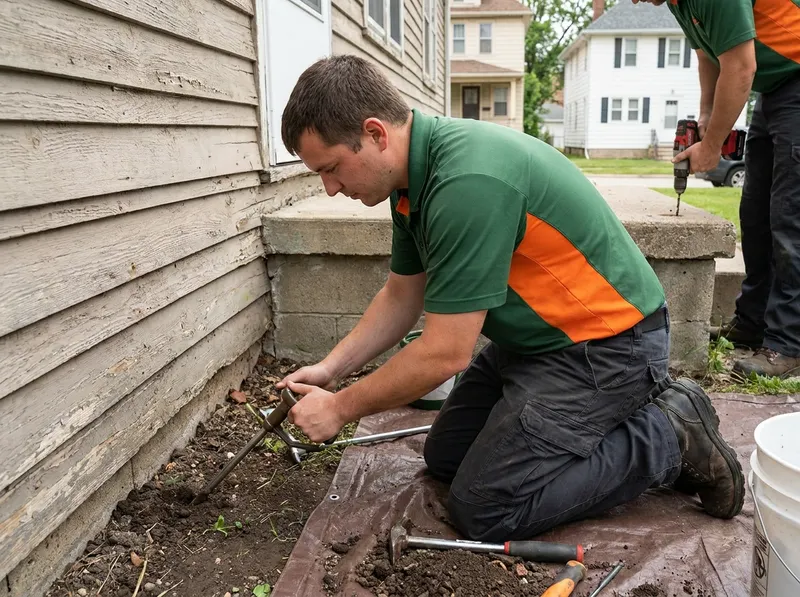
Subterranean termite (Reticulitermes flavipes) defense through continuous non-repellent liquid soil barriers (termiticides) trenched into exterior foundation borders alongside continuous tamper-resistant cellular monitoring stations to secure structural timber framing. Technicians excavate continuous trenches measuring 6 inches wide by 6 inches deep around foundation footings, applying liquid termiticides at measured volumes to build an undetectable soil barrier that foraging workers transfer back to subterranean queens. Exterior monitoring cartridges embedded at 10-foot intervals provide ongoing early detection for termite shelter tube construction, while interior structural sill plates receive borate timber treatments to harden wood framing against moisture and fungal digestion.
Get a quote →You get a firm, itemized quote for your pest control service before any work begins, no surprises, no pressure.
Careful prep, tidy work, and a full cleanup when we are done. We treat your home and belongings like our own.
The same trusted, background-checked team from the first call to the final check.
Selecting appropriate pest defense depends on structural age, pest biology, and infestation severity across local property types. If an active indoor sighting involves wood-destroying carpenter ants or subterranean termites, choose targeted micro-injection and structural perimeter liquid barriers rather than perimeter dusts; the trade-off is higher initial inspection labor to locate the satellite gallery, but it safeguards the structural framing. If rodent activity manifests as scratching within drywall or droppings along fieldstone foundations, select complete mechanical exclusion with heavy-gauge galvanized steel mesh over standard interior anticoagulant baiting; baiting alone leaves exterior access runs open, whereas physical exclusion permanently seals entry paths while requiring a dedicated physical audit of exterior wall plates.
For seasonal German cockroach infestations in multi-tenant rental properties, opt for precision insect growth regulators and rotation bait pastes over broadcast aerosol sprays; aerosol applications scatter populations into adjacent wall voids, while localized bait matrices eliminate the central breeding harborage at the cost of requiring 10 to 14 days of progressive consumption. When managing stinging insect nests high on dormers or inside porch soffits, choose direct specialized aerosol freezing injections over passive perimeter traps; traps lure foragers without eliminating the egg-laying queen, whereas direct nest extraction completely halts defensive stinging behavior within one treatment visit. In older masonry homes experiencing brown spider migrations, select mechanical threshold sweeps and microencapsulated exterior wall bands instead of broad chemical interior dusting; dusts become ineffective in humid lower levels, while durable exterior barrier bands stop arachnids before they cross interior sills.
For subterranean termites active in damp soil around foundation perimeters, continuous liquid barrier trenching using non-repellent termiticides delivers lasting structural protection compared to standalone bait monitoring stakes; bait stakes require repeated multi-month inspections to confirm colony feeding, whereas trenching creates an immediate, continuous treated protective zone surrounding the foundation footprint.
Every project gets a firm, written price after a free on-site visit. Ranges below for orientation.
Tell us about your pest control service job and we'll send a clear, written quote, usually the same day. Or just call and talk to a real Milwaukee pro.
(414) 300-8933
Properties situated near Lake Michigan, Riverside Park along the Milwaukee River, and the historic architectural corridors surrounding the Pabst Mansion encounter intense annual moisture cycles that accelerate perimeter wood rot, inviting aggressive carpenter ant colonies and cluster fly harborage. The architectural prominence of Cream City brick masonry, rough-hewn fieldstone basement foundations, and balloon-frame timber assemblies across Bay View, Riverwest, and Washington Heights creates distinct interior runways for Norway rats seeking thermal refuge as cold lake winds drop autumn temperatures below freezing. In commercial conversion zones like Walker's Point and the Historic Third Ward, aging warehouse sewer lines and heavy service infrastructure provide uninterrupted moisture pathways for large Oriental cockroaches and localized house mouse populations. Standard surface chemical dusting fails against the structural shifts caused by Midwestern freeze-thaw soil dynamics; long-term structural defense requires tailored exterior mortar repairs, 1/4-inch steel mesh exclusion anchored across plumbing penetrations, and microencapsulated exterior liquid barriers engineered to adhere through persistent humidity and heavy snow loads. During spring thaw periods around Lake Park and Sherman Park, saturated grade soils push subterranean termite colonies upward into low-clearance sill plates, requiring specialized sub-slab injection beneath basement concrete pads to halt structural cellulose consumption before summer humidity drives colony expansion.
Free estimates for Milwaukee & the surrounding area.
 Rasteno Pest Specialists