Flea and tick infestations across Milwaukee develop along distinct geographical and architectural patterns. Properties in close proximity to wooded corridors, such as Riverside Park along the Milwaukee River or the…
Flea and tick infestations across Milwaukee develop along distinct geographical and architectural patterns. Properties in close proximity to wooded corridors, such as Riverside Park along the Milwaukee River or the dense canopies of Lake Park, face heightened pressure from blacklegged deer ticks carried by suburban deer and urban wildlife. In historic neighborhoods like Bay View, Riverwest, and Washington Heights, classic wood-frame bungalows and high-density duplexes often feature subfloor gaps, shared laundry basements, and elevated porch crawlspaces where animal harborage allows flea pupae to overwinter insulated from freezing winter temperatures. Urban tick vectors also move through small perimeter yards in Walker's Point and Brewers Hill via opossums, feral cats, and raccoons traversing alleys between properties.
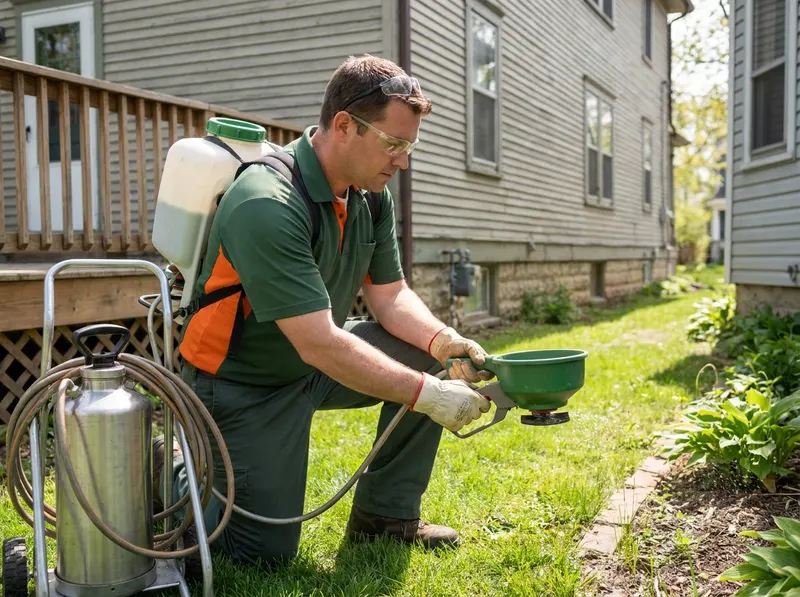
Decision-fit for flea and tick control centers on life-cycle interruption rather than simple perimeter pesticide spraying. Over-the-counter surface sprays kill adult biting insects on contact but leave flea pupae protected inside silk cocoons deep within hardwood planking cracks, carpet fibers, and baseboard registers. A professional dual-mode application deploys an adulticide for immediate knockdown alongside an insect growth regulator (IGR) that halts larval chitin synthesis and keeps unhatched eggs from maturing into biting adults. For yard spaces, liquid microencapsulated barriers target shady transition zones, under cedar decks, along brushy fence lines, and beneath ground-cover plantings, rather than saturating sun-exposed turf where ticks naturally desiccate and die.
Treatment protocol requires coordination between indoor prep and outdoor mechanical maintenance. Indoor areas require vacuuming of carpets, rugs, and furniture seams prior to service, followed by immediate disposal of vacuum contents into an exterior receptacle to remove active eggs. Residents and domestic pets vacate treated living spaces for 3 to 4 hours while liquid applications dry. Exterior tick defense involves establishing a 3-foot gravel or woodchip buffer between wooded lot lines and manicured lawns, keeping brush cut below 4 inches, and clearing leaf litter that traps ambient humidity. The operational trade-off of professional IGR treatments is time: residual regulators prevent population rebound over 60 to 90 days, but dormant pupae may still emerge for 10 to 14 days post-treatment before the barrier completely halts the generation cycle.
Every job gets a firm, written price after a free on-site visit.
Tell us about your flea and tick control job in Milwaukee and we'll send a clear, written quote, usually the same day.
 Rasteno Pest Specialists